PRODUCT DESIGNER
Growth & retention optimization of a healthcare platform
Company: PurposeMed
Team: a pod with myself, a product manager, and developers
Duration: June 2025-present
Introduction
PurposeMed connects underserved patients to specialized clinicians across HIV prevention, ADHD, and mental health care.
Embedded in a cross-functional product pod (PM, engineers, clinicians, marketing, support), I operated as an end-to-end Product Designer — leading discovery, research, experimentation, and implementation.
My focus was on high-leverage growth and operational challenges, particularly around prescription retention and support efficiency. By combining user research, KPI analysis, and rapid experimentation, I helped translate behavioral insights into measurable business impact across activation, retention, and cost reduction.
Increased first-time prescription refills
Nearly half of Freddie patients never refilled their first prescription — yet once they completed that first refill, 80% stayed long term. The drop-off wasn’t a small UX issue; it was a core growth constraint.
Working within a cross-functional product pod, I led discovery to understand where patients were getting stuck. Through session data, funnel analysis, clinician conversations, and moderated interviews, we uncovered a clear pattern: the refill flow felt overwhelming. The dashboard buried the next action, and patients hesitated before initiating a refill.
Instead of redesigning everything, we ran a focused two-week experiment. I simplified the dashboard, clarified the primary action, and guided users through a cleaner refill path. The changes were lightweight but intentional.
The impact was immediate. First-time refills increased by 60 per month — translating to roughly $60,000 in additional monthly revenue. Completion time dropped, friction decreased, and the improvements were rolled into permanent product updates.
This project reinforced something I deeply believe: meaningful growth often comes from identifying small, high-leverage friction points — and testing them quickly.
Streamlining lab workflows & reducing support load
As we dug deeper into retention and activation, it became clear that operational friction was also slowing the system down. Support teams were spending 4.5 to 7.5 hours per week manually sending lab requisitions and responding to confirmation messages. Nearly 10% of incoming patient messages were simple acknowledgments that labs had been received.
Through shadowing support and clinicians, reviewing messaging patterns in the portal, and interviewing patients, I uncovered the root problem: the lab communication flow was overwhelming and unclear. Patients received long, dense messages and often thought they needed to reply in the secure messaging portal after completing their labs — creating unnecessary back-and-forth.
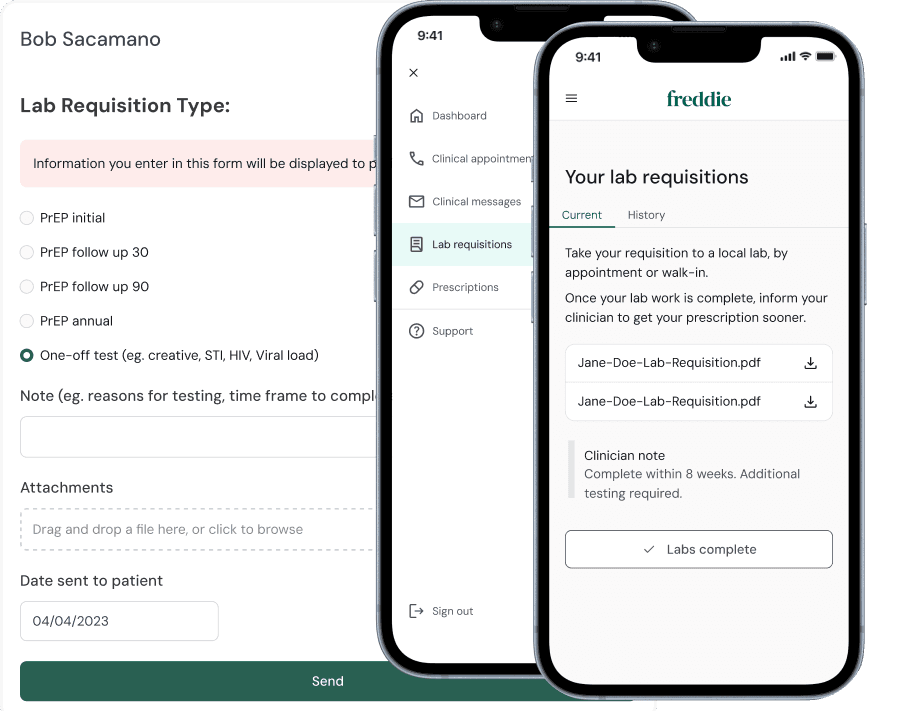
I restructured the workflow end to end. We consolidated requisitions into a dedicated lab page, simplified messaging, clarified CTAs, reduced clicks, and automated confirmations. We also refined lifecycle emails to reinforce the correct path forward.
Four months after launch, the new workflow saved the support team seven hours per week. Patients had clearer visibility into their lab status, and reliance on the messaging portal for administrative confirmations dropped. Operational overhead decreased while the patient journey became simpler and more transparent.
Redesigning support & messaging triage
Patients didn’t have a clear path for getting help. Non-clinical questions flooded the secure messaging portal, clinical inquiries landed in Zendesk, and support teams manually triaged messages in spreadsheets to keep things moving.
After shadowing support and analyzing message volume data, it was clear the system itself was the problem. There were no structured intake options, limited self-serve pathways, and unclear guidance on where to go.
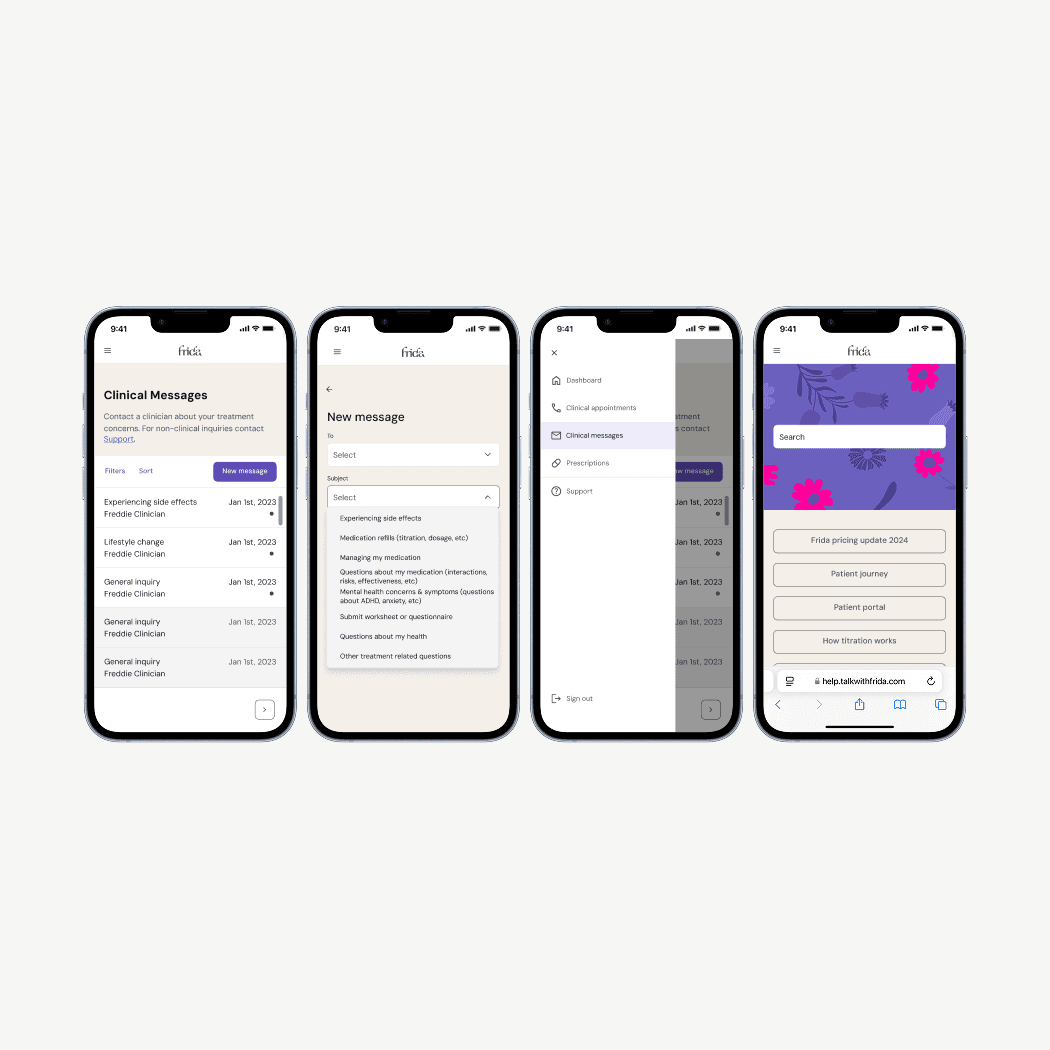
I redesigned the support flow to create clearer separation between clinical and non-clinical communication. We introduced structured topic selection, improved content design, centralized triage in Zendesk, and strengthened the help center to encourage self-serve before outreach.
Zendesk tickets dropped by 58%, secure messages decreased by 20%, and help center engagement increased 1.6×. Manual triage was eliminated, response times improved, and the messaging portal became a clearer, more intentional part of the patient experience.
PRODUCT DESIGNER
Growth & retention optimization of a healthcare platform
Company: PurposeMed
Team: myself and 2 product designers
Duration: June 2025-present
Introduction
PurposeMed connects underserved patients to specialized clinicians across HIV prevention, ADHD, and mental health care.
Embedded in a cross-functional product pod (PM, engineers, clinicians, marketing, support), I operated as an end-to-end Product Designer — leading discovery, research, experimentation, and implementation.
My focus was on high-leverage growth and operational challenges, particularly around prescription retention and support efficiency. By combining user research, KPI analysis, and rapid experimentation, I helped translate behavioral insights into measurable business impact across activation, retention, and cost reduction.
Increased first-time prescription refills
Nearly half of Freddie patients never refilled their first prescription — yet once they completed that first refill, 80% stayed long term. The drop-off wasn’t a small UX issue; it was a core growth constraint.
Working within a cross-functional product pod, I led discovery to understand where patients were getting stuck. Through session data, funnel analysis, clinician conversations, and moderated interviews, we uncovered a clear pattern: the refill flow felt overwhelming. The dashboard buried the next action, and patients hesitated before initiating a refill.
Instead of redesigning everything, we ran a focused two-week experiment. I simplified the dashboard, clarified the primary action, and guided users through a cleaner refill path. The changes were lightweight but intentional.
The impact was immediate. First-time refills increased by 60 per month — translating to roughly $60,000 in additional monthly revenue. Completion time dropped, friction decreased, and the improvements were rolled into permanent product updates.
This project reinforced something I deeply believe: meaningful growth often comes from identifying small, high-leverage friction points — and testing them quickly.
Streamlining lab workflows & reducing support load
As we dug deeper into retention and activation, it became clear that operational friction was also slowing the system down. Support teams were spending 4.5 to 7.5 hours per week manually sending lab requisitions and responding to confirmation messages. Nearly 10% of incoming patient messages were simple acknowledgments that labs had been received.
Through shadowing support and clinicians, reviewing messaging patterns in the portal, and interviewing patients, I uncovered the root problem: the lab communication flow was overwhelming and unclear. Patients received long, dense messages and often thought they needed to reply in the secure messaging portal after completing their labs — creating unnecessary back-and-forth.
I restructured the workflow end to end. We consolidated requisitions into a dedicated lab page, simplified messaging, clarified CTAs, reduced clicks, and automated confirmations. We also refined lifecycle emails to reinforce the correct path forward.
Four months after launch, the new workflow saved the support team seven hours per week. Patients had clearer visibility into their lab status, and reliance on the messaging portal for administrative confirmations dropped. Operational overhead decreased while the patient journey became simpler and more transparent.
Redesigning support & messaging triage
Patients didn’t have a clear path for getting help. Non-clinical questions flooded the secure messaging portal, clinical inquiries landed in Zendesk, and support teams manually triaged messages in spreadsheets to keep things moving.
After shadowing support and analyzing message volume data, it was clear the system itself was the problem. There were no structured intake options, limited self-serve pathways, and unclear guidance on where to go.
I redesigned the support flow to create clearer separation between clinical and non-clinical communication. We introduced structured topic selection, improved content design, centralized triage in Zendesk, and strengthened the help center to encourage self-serve before outreach.
Zendesk tickets dropped by 58%, secure messages decreased by 20%, and help center engagement increased 1.6×. Manual triage was eliminated, response times improved, and the messaging portal became a clearer, more intentional part of the patient experience.